
Advanced Diagnostic Testing for Brain and Nerve Conditions
If you’re experiencing symptoms like seizures, numbness, tingling, muscle weakness, or unexplained nerve pain, your neurologist may recommend diagnostic testing such as an EEG or EMG. At Mississippi Neurological Institute in Jackson, MS, we offer both tests on-site to help accurately diagnose neurological conditions and create personalized treatment plans.
What is an EEG (Electroencephalogram)?
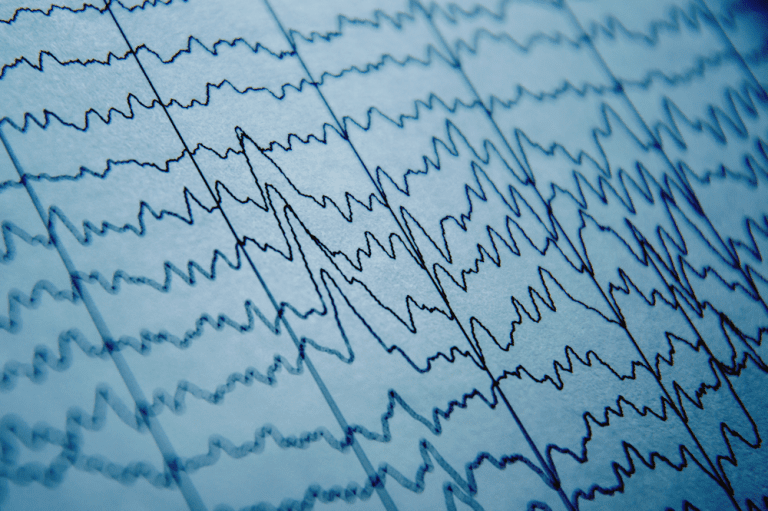
An EEG measures the electrical activity of the brain. It’s a safe, painless, and non-invasive test used to detect abnormalities in brain function. An EEG records brain waves and helps diagnose conditions that affect the brain’s electrical activity.
Why Might You Need an EEG?
Your neurologist may recommend an EEG if you have:
- Seizures or epilepsy
- Unexplained episodes of staring or loss of awareness
- Head injuries
- Sleep disorders
- Brain infections
- Memory or cognitive concerns
- Monitoring for brain activity after a stroke
What Happens During an EEG?
- Small sensors (electrodes) are attached to your scalp.
- You’ll lie comfortably while the machine records your brain waves.
- The test usually takes 30 to 60 minutes.
- In some cases, longer-term or sleep-deprived EEGs may be recommended.
What is an EMG (Electromyography)?
An EMG measures the electrical activity of muscles and the nerves that control them. It helps diagnose nerve and muscle disorders by evaluating how well your nerves send signals to your muscles.
Why Might You Need an EMG?
Your neurologist may recommend an EMG if you have:
- Muscle weakness
- Numbness or tingling in the arms or legs
- Unexplained pain or cramping
- Suspected nerve compression (like carpal tunnel syndrome)
- Suspected neuropathy or radiculopathy
- Neuromuscular disorders (such as ALS or Myasthenia Gravis)
- Sciatica or back pain with nerve involvement
What Happens During an EMG?
- A thin needle electrode is inserted into specific muscles to record their electrical activity.
- Nerve conduction studies (NCS) may be performed at the same time by placing electrodes on the skin and sending small electrical impulses to measure nerve function.
- The test can take 30 to 90 minutes depending on the number of areas tested.
- Some discomfort may occur during the needle portion, but it’s generally well tolerated.
Why Choose Mississippi Neurological Institute for EEG & EMG Testing?
- Board-certified neurologist with expertise in nerve and brain function testing
- State-of-the-art EEG and EMG equipment for accurate results
- On-site testing for patient convenience
- Comprehensive evaluation and personalized treatment plans based on your test results
- Conveniently located in Jackson, MS, serving patients across Mississippi
Schedule Your EEG or EMG Test Today
If you’ve been referred for EEG or EMG testing, or if you’re experiencing symptoms like seizures, muscle weakness, or nerve pain, contact Mississippi Neurological Institute in Jackson, MS. Call 601-345-4525 today. Our team is here to provide answers and expert neurological care.